

The Sunni/Shi'a Divide
It seems like everyone is weighing in now. So why not me?

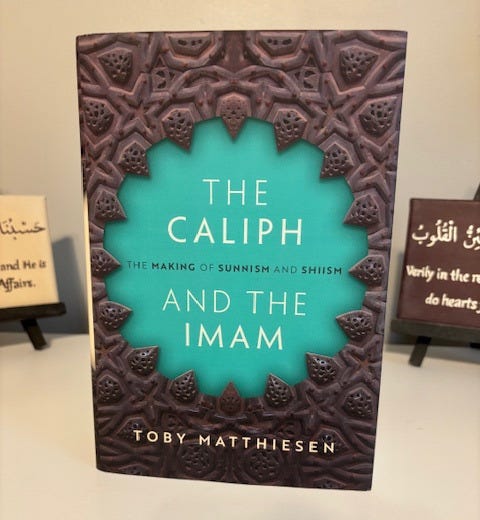
I’ve long been fascinated with sectarianism and orthodoxy. It’s partly the reason why I entered grad school with the intention of becoming an Islamic scholar.1
Well, that didn’t happen, because I am here writing on Substack instead of researching for my next monograph on some obscure topic no one other than a few peers might read.
Wait, that’s true of my Substack as well. Oh God, you really do have a sense of humour!
About a week ago, one of my friends (who is not Muslim, I should add) asked me if I was Sunni or Shi’i. I was a bit surprised, but maybe that’s a good thing. It reminded me of the time when my best friend in high school expressed surprise when I told her I was Muslim. That was not a good thing.
So I took the opportunity this time around to explain the basic differences, much of which I learned from my time at grad school. I am thankful for those two years because had I not been exposed to the vast scholarship from within the Islamic tradition, I am not sure what I would have said.
I grew up with a lot of teachings and messages that precluded me from understanding different points of view.
When I entered my “rebellious” teenager phase, I thought it was the height of irony that my family held misinformed views about other Muslims, just as other Muslims (not always the same group) held misinformed views about us.
It all came down to sectarianism — and not just between Sunni and Shia, but amongst Sunni Muslims, too.
I’ve had to hide parts of my Muslim “identity” from other Sunni Muslims because of the things they said about people like my family. Unfortunately, I still have to in many Muslim spaces to this very day.
There’s only one right way and my way is it. That’s a human tendency, and I understand it, but what make us so sure?
Although I consider myself an orthodox Sunni Muslim, formed by a South Asian understanding of Hanafi fiqh2, who leans toward a Maturidi conception of God, and believes tasawwuf is an essential Islamic science… I still hold open the possibility I may not have it all.
I don’t know if my final abode will be in Heaven. I pray that it is, but it is only through the Mercy of God and the prayers of the Prophet Muhammad (peace be upon him) for his ummah that I believe I will enter.
It is with that core belief I try to live my life today.
And let’s be honest, throughout these past couple of years of genocide, who were the Muslims fighting for the Palestinians? What good has sectarianism got us when fellow Sunnis with great wealth are unwilling to help their so-called brethren?
I don’t have any neat talking points on this divide nor am I all that concerned, though I remain fascinated. This past Ramadan has been a mentally transforming one in that my reliance upon God alone has strengthened.
Well, that’s my jum’uah khatirah for today. Hope you enjoyed it, whether you are Sunni, Shi’i, “just Muslim” or not even Muslim.
P.S. I’d love to know if you have any questions about anything I wrote. Confused? Triggered? Resonated? Please do share in the comments. This is one post where I really do want to know what others think.
Actually come to think of it, I don’t think I was fully aware of all my reasons. In any case, I’ve been fascinated with sectarianism since grad school.
What do I mean by that? I pray like a Hanafi but I don’t eat like one, i.e. I eat shellfish.
Salaamu alaykum. I appreciate the post. When I accepted Islam in back in 2004 I fell in with the self-proclaimed "Salafi" crowd. While that provided me with a very rigid and structured introduction that helped ground me in the fundamentals of aqeedah and fiqh, I found that over time I became very judgemental and harsh towards anyone who did not identify as "Salafi". In the years that followed, I transitioned towards other Islamic centers that were grounded in Sunni orthodoxy, but not nearly as partisan as my "Salafi" cohort (I put that in quotation marks because like any group, you are likely to find amazing people in each and I cannot discount that/them). Interesting enough, it was only after moving to Saudi Arabia for several years, sitting with some prominent scholars in Khobar, Taif and Makkah and students of knowledge from Madinah, watching the rise and fall of ISIS from afar, getting older, having kids and just gaining more life experience, that my perceptions about various groups, sects and opinions became more nuanced and less prone to blind partisanship. Thanks for sharing.